
Fields in Oneida County Tax Records
The assessment roll and the tax account do different work. Idaho statutes set taxable value at full market value, less any exemptions allowed by law. Each valuation is dated January 1. The Treasurer then applies levies from local taxing districts. The office tracks each tax bill through payment. A recorded sale price, by contrast, belongs to the deed records rather than the tax roll.
| Field | What It Shows | Where |
|---|---|---|
| Land, improvements, total | Components and total for the assessment year | Oneida County Assessor |
| Market and assessed value | January 1 estimate and taxable calculation | Assessor |
| Exemption status | Approved reduction reflected on the parcel | Assessor |
| Bill and payment status | Amount billed, payment, and current balance | Treasurer/Tax Collector |
| Tax code and levies | District context used in the bill calculation | Assessor and Treasurer |
No property tax goes to the State of Idaho. Counties collect it on behalf of local taxing districts. A higher assessment does not guarantee a matching rise in the bill. Likewise, Idaho's much-discussed 3% budget-growth limit does not cap any single parcel's assessment.
Request Oneida County Assessment Fields
The Oneida County Assessor page shows the office values taxable property. It also tracks ownership changes. The office keeps current plats and administers exemptions. It offers no public parcel-card form on the page itself. When you contact the office, request the parcel ID. Ask for the legal description, tax code area, and assessment year. Also ask for the land, improvement, and total values on the tax roll.
| Search key | Verified status | How to proceed |
|---|---|---|
| Parcel/APN | No public county field captured | Ask Assessor for the exact identifier |
| Situs address | No public county field captured | Supply normalized street forms |
| Owner name | No public county field captured | Give exact and entity variants |
| Legal description | Maintained across parcel records | Use it to match deeds and plats |
The official Assessor page shown below is the current contact and application hub.
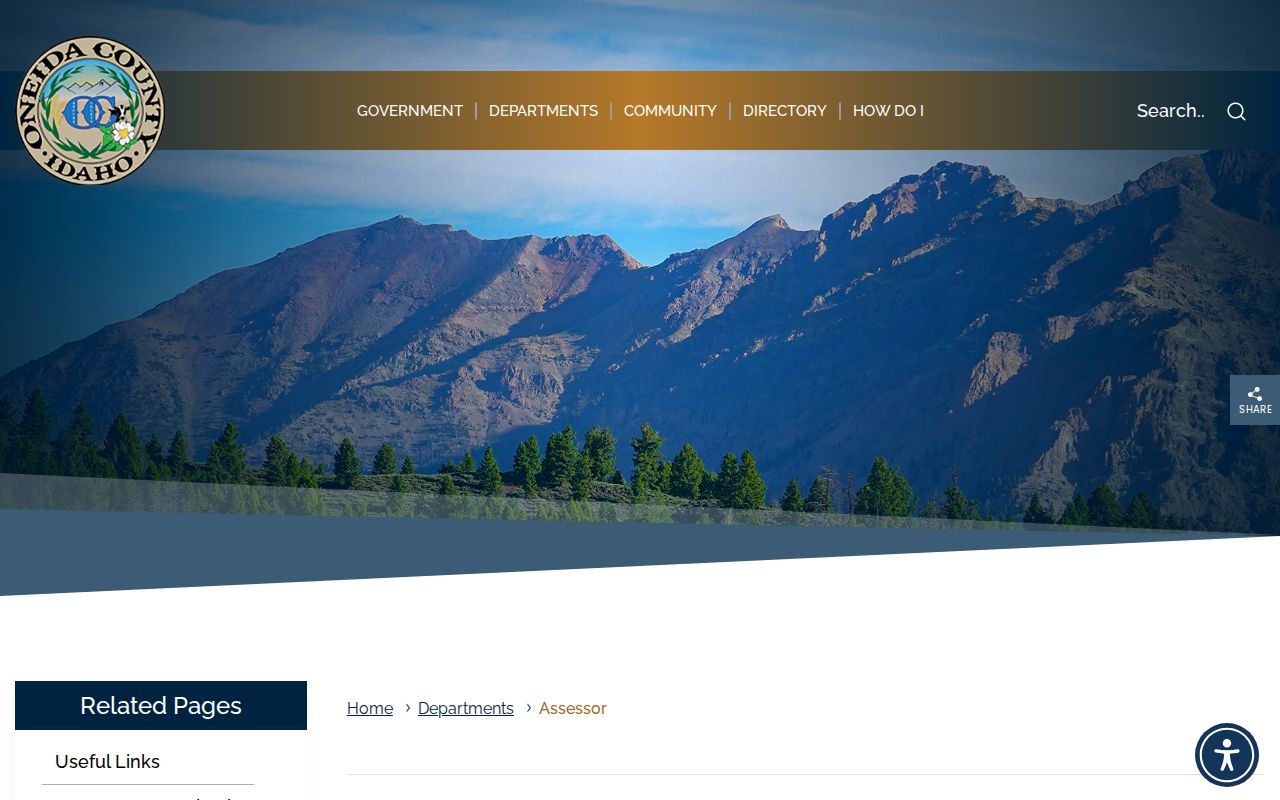
Treat the page as a way to reach the office and its exemption forms. It is not evidence that an online tax-roll search exists.
Oneida County's January Tax Snapshot
The Idaho Tax Commission describes market value as what a typical buyer would pay as of January 1. Idaho assesses at 100% of that market-value estimate, subject to exemptions. The assessment is not a recorded sale price, and a payment receipt is not a valuation record.
The state explanation below supplies the framework behind Oneida County property tax records.
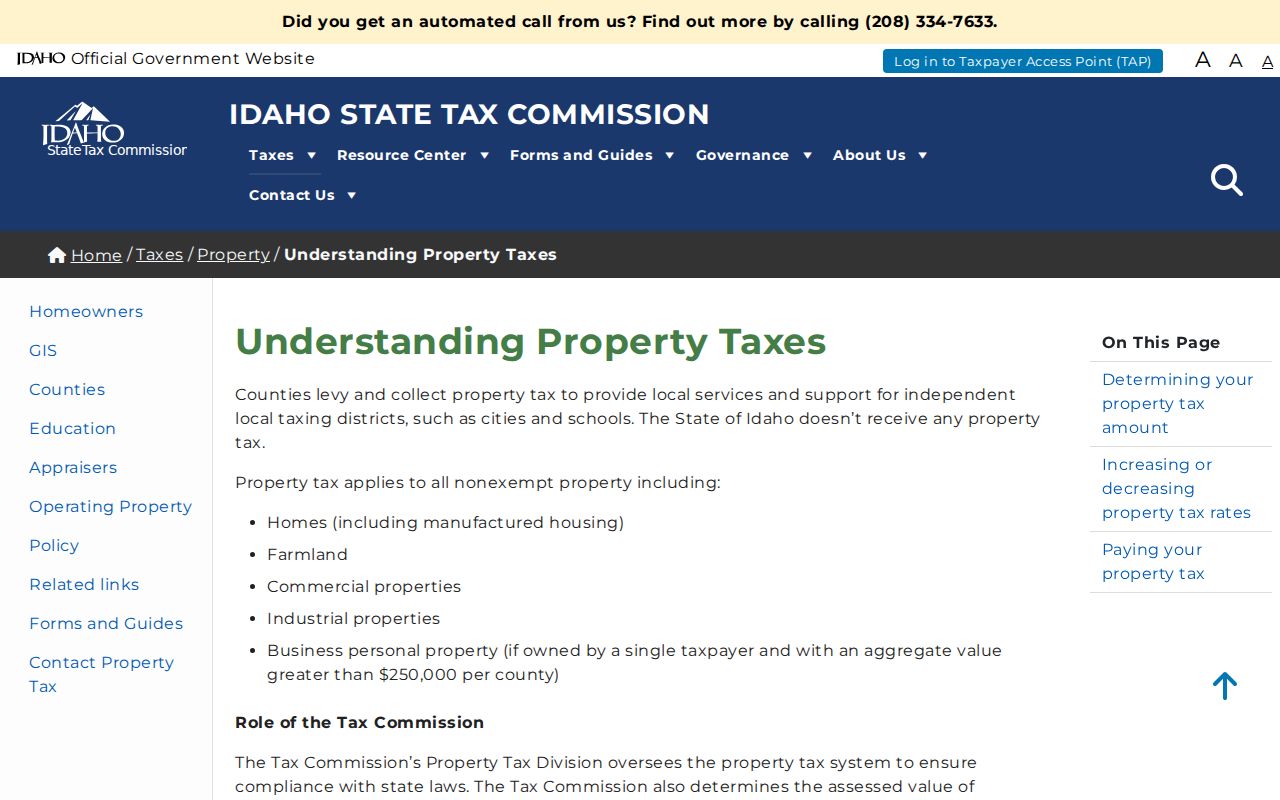
Read the parcel's dated assessment beside the actual bill. Market conditions, exemptions, and levy changes each move different parts of that comparison.
Look Up an Oneida County Tax Bill
The Oneida County Treasurer/Tax Collector collects real, personal, and operating-property taxes. Contact Leigh Anne Love at (208) 766-4116 ext. 1108. The office is open Monday through Friday, 9 a.m. to 5 p.m.
- Get the parcel number and assessment year from the Assessor.
- Ask the Treasurer for the current bill, payment status, and any amount still due.
- Compare exemptions and tax code area with the Assessor's dated record.
- Request a receipt or written account statement when proof of payment matters.
- Assessed value
- The parcel value used in the tax process after applicable rules.
- Market value
- The assessor's January 1 estimate of a typical buyer price.
- Levy
- A taxing district's rate applied in calculating tax.
- Homeowner exemption
- Qualified relief for an owner-occupied primary residence.
- Tax lien
- A claim tied to unpaid property tax.
The county publishes no online tax-bill lookup, receipt search, delinquent list, or tax-sale list. Call the Treasurer for a current total.
PayPort Is Not a Tax Search
The county links to NIC PayPort. Its public workflow runs Select Item(s), Information, Payment, and Submit Payment. The payment screen offers no address, parcel, owner, tax-year, balance, or history search before a transaction.
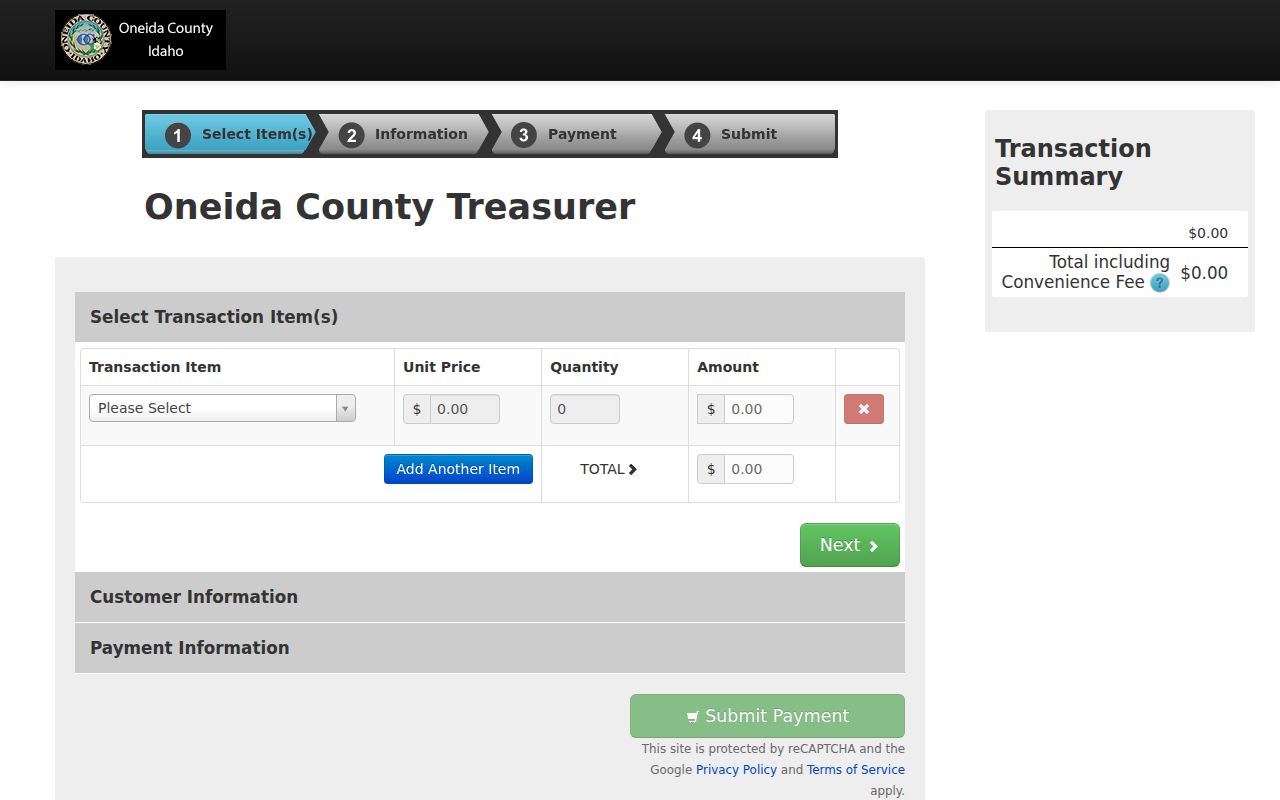
Card and debit payments carry a 2.5% convenience fee. A finished transaction may produce a receipt. The landing page shows no balance or account history. Oneida County's Treasurer page says tax notices are mailed no later than the fourth Monday in November. Idaho's normal deadlines are December 20. Another option is half by December 20 and the balance by June 20. Confirm penalties and the current balance directly with the office.
Oneida County Homeowner Tax Relief
The Idaho homeowner exemption covers 50% of the value of a qualifying home and up to one acre. It is capped at $125,000. Oneida County's local page requires the owner to use the home as a primary residence. The owner must also live there more than six months per year and claim no other Idaho homeowner exemption. The exemption continues until ownership or primary-residence status changes. Because it cuts taxable value, not sale price, verify the approved status and assessment year when reviewing Oneida County property tax records.
Oneida County Reduction and Deferral Forms
The current Property Tax Reduction program takes applications each year from January 1 through April 15. The 2026 brochure uses a 2025 income threshold of $39,130. It describes a benefit of up to $1,500 on the December bill. Applicant status, ownership, occupancy, and other rules still control. The PTR form asks for county, code area, parcel, physical address, owner and spouse, primary-residence occupancy, partial ownership, and any trust, life-estate, LLC, or corporation interests. It also holds sensitive data. Do not publish a completed form. Veterans have a separate route. Deferral is a different program and creates a lien for deferred tax plus interest. Oneida County's local reduction page shows stale figures, so pair it with the current state form. Confirm deadlines with the Assessor.
Small Oneida County Agricultural Parcels
The Oneida County agricultural-use page lists field crops and timber. Grazing and crop rotation also count as qualifying uses. Personal-use grazing is not bona fide profit agriculture. Parcels of five acres or less need an application by March 15. That application covers the following year. The form requests owners, parcel number, legal description, and property and mailing addresses. It also asks for the qualifying year and a signed certification under Idaho Code § 63-604. This rural Oneida County rule turns on the specific parcel. Ask the Assessor how acreage and actual use were recorded in the property records.
A Real Oneida County Appeal Record
One real case comes from the Board of Tax Appeals. It is the Thurber matter, covering the 2022 tax year. The parcel was RP0005200A, a commercial property in downtown Malad. The roll placed $14,000 on the land. It placed $13,795 on the improvements. The total was $27,795. The local board denied the appeal. The state board affirmed that denial, closing the record for the year.
Read the numbers as anatomy, not as a live value. That appeal file shows what a complete one holds. It includes the notice, the tax year, the parcel number, and the legal description. It also holds the land and improvement split, comparable sales, photos, condition evidence, exemption status, and correspondence. Every piece supports the next.
Contest an Oneida County Assessment
The state's official calendar for 2022 put assessment notices out in June. They went out on the first Monday of the month. County Board of Equalization appeals were then due by the fourth Monday in June. That was a single year's schedule. Confirm the current deadlines with the county. Do not rely on any date from a past calendar.
Confirm the appeal window. Contact the Oneida County Assessor for the current notice date, form, filing deadline, and Board of Equalization procedure.
Start with the Assessor well before any formal cutoff. Ask how to review the parcel. Keep the envelope or notice date. Then compare the county's land, improvement, and total values against evidence that actually fits the parcel and its valuation date. For the meaning of the numbers alone, see the Oneida County property value page.
A strong comparison matches size, land use, improvements, condition, and location. Flag any legal-description mismatch that weakens a proposed comp. Photographs document physical condition. A survey or plat can settle acreage and parcel-shape questions. File through the current process once the evidence is assembled. Keep the Assessor's written response and the Board's final decision with that year's tax file.
Remember that value and tax status are separate tracks. A successful appeal changes the assessment. It does not prove an installment was paid or erase a recorded lien. After the decision, ask the Assessor which roll field changed. Ask the Treasurer whether a revised bill will issue. Use the same parcel number and assessment year in both requests so nothing falls between the two offices.